Bite Point Blues: Why London Traffic Wears Out Clutches Long Before the Mileage Says So
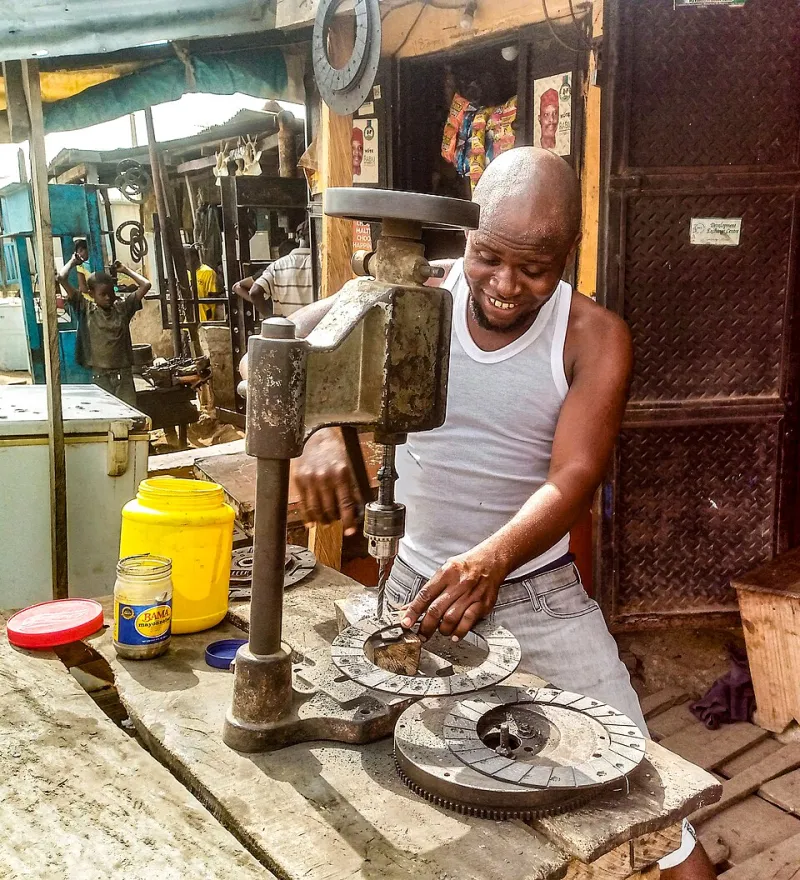
Photo: Frankincense Diala, CC BY-SA 4.0, via Wikimedia Commons
A clutch is a wear item. Everyone knows that, in the abstract, the same way everyone knows a brake pad is a wear item. What catches people out is the timescale — because clutch life is decided far less by mileage than by how many times the thing was asked to slip.
And London asks constantly.
The physics, briefly
A clutch is two discs pressed together: one bolted to the engine, one connected to the gearbox. Spring pressure holds them together so they turn as one. Press the pedal and you separate them, breaking the drive so you can change gear. Let the pedal up and they meet again, sliding against each other for a fraction of a second until the speeds match.
That sliding is the clutch's job, and it is also what kills it. Every engagement removes a microscopic layer of friction material and dumps a pulse of heat into the assembly. Do it gently and occasionally and a clutch will last well over 100,000 miles. Do it thousands of times in slow traffic, half-engaged, on a slope, with a loaded car, and you can measurably shorten its life inside 30,000.
Why a London car is a special case
Consider a typical week. Twenty minutes of crawling on the Camberwell New Road. A hill start at the top of Muswell Hill because someone stopped abruptly at the lights. A multi-storey ramp with a queue on the spiral. A tight reverse into a residents' bay, forwards, backwards, forwards again. A 20mph limit that never quite lets you settle into second.
None of that shows up as mileage. All of it shows up as engagements — and engagements are what a clutch is actually counting. A car that has covered 20,000 urban miles may have been through more clutch cycles than a reps' estate that has done 60,000 on the M4.
Then there are the habits that quietly accelerate everything:
- Holding on the bite point at a hill junction instead of using the handbrake. This is the single most expensive habit in London driving. The clutch is doing the job the handbrake was designed for, and it is doing it by slipping.
- Riding the pedal in traffic — resting a foot on the clutch between gear changes. Even light pressure keeps the release bearing loaded and the plate partly disengaged.
- Creeping forward in a queue rather than waiting for a genuine gap. Every creep is a full engagement cycle.
- Holding the car on the clutch in a car park ramp, which combines slipping with load and low airflow.
The signs people talk themselves out of
Clutches rarely fail without warning. They give plenty of notice, and the notice is usually ignored for months.
A bite point that has crept up the pedal travel. You used to lift your foot a third of the way; now it is nearly at the top before anything happens. Worth noting that some cars self-adjust, so a high bite is not automatically terminal — but a bite point that has moved noticeably in six months is information.
Rev flare under acceleration. You put your foot down in third and the engine note rises before the speed does. That is slip, and slip under load is the clearest single indicator of a worn plate.
Judder when pulling away. A shuddery, snatching engagement can mean a contaminated or glazed friction surface, a warped cover, or worn engine/gearbox mounts. It is not always the clutch — but it often is.
A hot, acrid smell after a hill start. Burning friction material has a very specific smell, like scorched pencils. Once is fine. Regularly is not.
Difficulty selecting first or reverse, or a pedal that feels spongy or slow to return. That points more towards hydraulics — the master or slave cylinder — than the plate itself, and it is worth diagnosing properly rather than assuming the worst.
A whine or rumble that disappears when you press the pedal. That is usually the release bearing, and it is a strong hint that the gearbox is coming out anyway.
A five-minute diagnosis you can do yourself
Find a quiet, flat stretch — an empty car park on a Sunday, not a residential street with kids about. Warm the car up properly first. Then, from a standstill, select third gear and try to pull away gently as though you were in first.
A healthy clutch will stall the engine almost immediately. A worn one will let the engine labour on and possibly keep running, because the plate cannot grip hard enough to drag the car. If it stalls crisply, you have learned something useful. If it slips, you have learned something expensive.
Do not repeat this test endlessly. Once is diagnostic. Five times is abuse.
What you are actually paying for
The clutch disc is rarely the expensive part. Labour is. The gearbox has to come out, and once it is out, it is false economy to refit a worn release bearing, a tired slave cylinder or a dual-mass flywheel that is on its way out. That is why a quote can look wildly different between two garages for what sounds like the same job.
As a rough shape, a small hatchback with a conventional flywheel might land somewhere between £450 and £900. Add a dual-mass flywheel and you can comfortably be past £1,000. Bigger cars, transverse versus longitudinal layouts, and anything with a concentric slave cylinder all move the number around.
Questions to ask before you say yes
- What exactly is included — disc, cover, release bearing, slave cylinder, flywheel?
- If it is a dual-mass flywheel, are you replacing it, and why or why not?
- Which brand of kit are you fitting, and what warranty comes with the parts and with the labour separately?
- Will the gearbox oil be changed while it is out?
- Is there anything else in there — mounts, seals, a leaking crank seal — worth doing now?
- What is the total, including VAT, and is there any chance of a surprise once it is open?
A garage that answers those six cleanly is a garage worth using. A garage that shrugs at the third one is telling you something.
And once it is done: use the handbrake on hills, take the car out of gear and off the pedal at long lights, and stop creeping in queues. The new clutch will last considerably longer than the old one did.