Pressed, Nothing, Panic: A London Driver's Guide to Keyless No-Starts
It is 7.40 on a wet Wednesday. The car is on a single yellow, the hazard lights are already on in your head, and the push-button start is doing what it does best: nothing. No click, no crank, just a polite little message on the dash saying it cannot detect the key. You are now blocking a bin lorry, and the day has changed shape.
Keyless trouble has a way of arriving at the worst possible moment, but it is almost never a genuine mystery. There are really only three parties involved: the fob, the car's 12V battery, and the immobiliser handshake between them. Work out which one has gone quiet and you are most of the way to a fix.
How the handshake actually works
The fob is not really a remote control in the traditional sense. It spends its life listening. When you touch the door handle or press the start button, the car sends out a low-frequency signal, the fob wakes up and answers on a radio frequency, and the immobiliser decides whether it recognises the code. Only then does the button do anything. If that conversation breaks down, the car behaves like a machine that has never met you.
That matters because it explains the odd symptoms. A car that unlocks fine but refuses to start is often a fob battery fading in a way that still allows short-range unlocking. A car that will not even unlock is a different problem entirely.
Why London is unusually hard on fobs
Keyless fobs are effectively small computers running on a coin cell, usually a CR2032. That cell copes well with steady, predictable use. What it does not love is hundreds of tiny wake-ups a day, and that is precisely what city driving delivers. Every time you walk past the car with the fob in your bag, there is a chance it is being polled. Short hops to the school gate, the Tesco run, the twenty-minute crawl down the South Circular - none of these give the alternator much time to top the car battery up either, so both batteries end up living on short rations.
Cold snaps finish the job. A coin cell that is at 60 percent in September can be genuinely unreliable by the first frost in November. If your fob is more than two or three years old and has never been changed, it is a candidate.
Warning signs worth catching early
Fobs rarely die without a warning. They get grumpy first. You might notice you have to be closer to the car than you used to be, or that the doors need a second tug of the handle. The dash may flash a low-key-battery message, though plenty of cars keep that information to themselves. Some drivers find the fob only works when held right up against the start button, which is the automotive equivalent of shouting.
If you have a second fob, try it. If the spare works perfectly and the everyday one does not, you have your answer for the price of a coin cell.
Roadside checks that cost nothing
Before you assume the worst, run through the obvious. Is the fob actually in the car? It sounds daft, but a fob in a coat pocket in the boot, or in a bag on the back seat, sometimes falls outside the cabin antenna's comfort zone. Is it pressed up against a phone, a laptop or a bunch of keys? Metal and electronics both interfere. Has a dashcam or tracker been hardwired recently? Cheap installations can introduce interference that confuses the antenna.
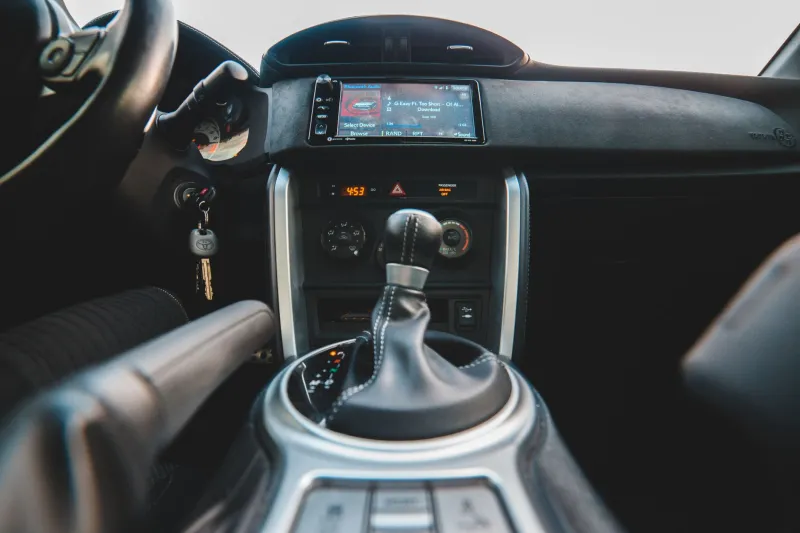
Then try the trick most handbooks mention but nobody reads: hold the fob directly against the start button and press it. Many cars have a receiver coil in the button itself for exactly this situation, which will let you start the car even with a flat fob battery. Some models prefer a marked pocket in the centre console instead. Either way, it is worth knowing where yours is before you need it.
When it is the car battery, not the fob
Honestly, this is the one that catches people out. A weak 12V battery under the bonnet will produce keyless no-starts that look exactly like fob failure, especially on a cold morning after a week of two-mile journeys. Look for slow, lazy cranking when it does start, dimmer interior lights, or a battery that has been on the car for five years or more. Corroded terminals do the same thing. If the fob is new and the car still sulks, the battery wants testing, and that is a five-minute job with the right kit.
Getting in when the fob has given up
There is almost certainly a physical key blade hidden inside your fob - usually released by a small sliding catch. On the door handle there will be a small cap that prises off to reveal a traditional keyhole. It is fiddly, it feels wrong, and it will get you inside. Do not force the cap with a screwdriver wrapped in a tea towel if you can avoid it; trim tools are kinder to paint.
Once inside, remember the fob-against-the-button trick. Nine times out of ten that is enough to get you home or to a garage rather than onto the back of a recovery truck.
What a replacement actually costs in 2026
A fob battery is the cheapest repair in motoring. Buy a decent branded CR2032 for somewhere between three and eight pounds and fit it yourself in ninety seconds - most fobs split along a seam with a small flat blade. A garage will usually charge fifteen to twenty-five pounds to do it while you wait, which is fair enough if the thought of cracking the case makes you nervous.
A new key altogether is another matter. A replacement fob supplied and programmed typically lands somewhere between £150 and £350 depending on the model, with main dealers at the upper end and sometimes beyond. Aftermarket keys can be cheaper, but quality varies and not every car will accept one.
Questions to ask before anyone touches the programming
If a key needs coding, ask three things. First, do they need all the keys present? Many systems wipe and re-register every key during programming, which means a spare left at home may stop working. Second, will the old key be erased from the car's memory, particularly if one has been lost or stolen? Third, is the key genuine or aftermarket, and what happens if it does not take? Get that in writing on the quote.
One last thing about theft
Keyless cars are targeted by relay attacks, where a pair of thieves amplify the fob signal from inside your house to the car on the drive. A cheap signal-blocking pouch by the front door, and a steering lock for visible deterrent, costs far less than an insurance excess - and it will save your fob battery a little wear too. Do not leave a spare fob in the car. Ever.
If you have changed the fob battery, tried the spare, checked the car battery and the car still will not play, that is the point to bring it in. We would rather spend ten minutes diagnosing it properly than have you guessing on a cold kerb.