Charging Without a Driveway: Cable, Kerb and Neighbour Etiquette on London Terraces
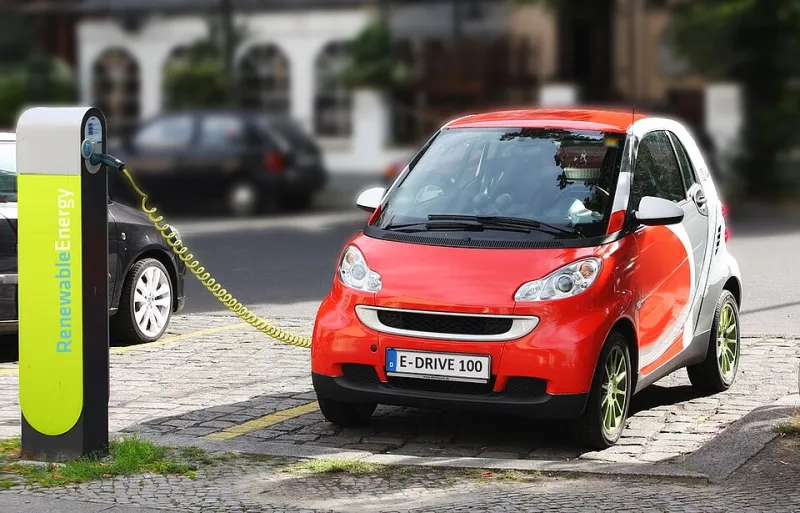
Photo: original: Michael Movchinedited by Felix Müller, CC BY-SA 3.0, via Wikimedia Commons
There is a moment every new EV owner on a London terrace goes through. The car is on the street, the charger is on the front wall, and between them lies four metres of pavement that belongs to everybody and nobody.
What follows is usually one of three things: a cable taped down with duct tape and a vague sense of guilt, an expensive and unnecessary public charging habit, or a proper, considered setup that nobody notices and nobody trips over. This piece is about getting to the third one.
The pavement is not yours, and that is the whole issue
Legally, there is no neat national rule that says you may or may not trail a charging cable across a public footpath. What exists instead is a patchwork: highway obstruction law, council policy, and — if something goes wrong — the ordinary rules of negligence.
In practice, that means the answer to 'can I run a cable across the pavement' is 'ask your borough, and be ready for the answer to be no'. Several councils have run cross-pavement charging trials over the past few years, usually with a purpose-made channel or ramp and a formal application. The rules differ from borough to borough and sometimes from street to street. Before you buy a cable ramp or book an electrician, spend ten minutes on your council's website. It is the cheapest part of the whole exercise.
And if your cable is genuinely, unavoidably crossing a footpath, the standard is simple: a pedestrian — including someone with a stick, a buggy, or poor sight — must be able to pass without stepping into the road or lifting a foot. Anything less is a trip hazard, and a trip hazard on a public footpath is a liability question, not a convenience question.
Ramps, channels and what good looks like
A proper cable protector is not a strip of rubber from a bargain bin. It should be heavy enough to stay put, wide enough to sit flat, sloped on both edges, and rated for foot traffic — ideally wheelchair and pushchair traffic too. Cheaper versions skid on wet paving and create exactly the hazard they were meant to remove.
The better solution, where the geometry allows, is not to cross the pavement at all. Park hard up against the kerb directly outside your own frontage, mount the chargepoint on the wall in line with the parking bay, and take the shortest possible route. Ten centimetres of pavement under a taut cable is a very different proposition from a loose loop across two metres of flagstones.
Things that do not work, and that we have seen fail in person:
- Domestic extension leads. A coiled 13A lead running for eight hours is a fire waiting for a reason. If you have absolutely no alternative, use a properly rated EV lead, fully unwound, protected from rain, and treat it as a stopgap for a fortnight, not a lifestyle.
- Gaffer tape. It lifts in the wet, it leaves residue, and it fools nobody.
- Cables draped over garden walls or through hedges, where they chafe against brick and eventually expose the inner sheath.
Weather, connectors and the bits that matter
Modern chargepoints and connectors are well sealed, and the charging handshake means the pins are not live until the car and the unit have talked to each other. That is genuinely reassuring. It is not a licence to leave a plug face-down in a puddle.
Look for a unit rated IP65 or better, with an integral RCD or a dedicated circuit that has one upstream. Keep the connector cap on when it is not plugged in, and hang the plug on its holster rather than letting it rest on the pavement. In freezing weather, a connector that has iced into the car's inlet is a genuinely miserable twenty minutes; a squirt of silicone spray on the seal in November is cheap insurance.
Finally: tell your home insurer. Not because anything is necessarily wrong, but because a claim in year three that involves a cable you did not mention in year one is a conversation nobody enjoys.
Being a good neighbour about it
A charging cable is a visible statement that you have claimed a piece of the street. Even if you have every right to be there, it pays to be deliberate about it.
Charge overnight, not all weekend. Move the car once it is full so the bay does not become a private parking space. Don't run the cable past a neighbour's gate where they will need to step over it to put the bins out. If you share a frontage with a converted flat, talk to the other household before the electrician arrives rather than after.
A short note with your mobile number, left once with the neighbours either side, resolves about ninety per cent of the awkwardness before it starts. London streets run on small courtesies.
When the public charger is simply the better answer
Home charging is cheaper — typically a good deal cheaper per kWh than even a moderately priced public unit — but cheaper only counts if the setup is safe, legal and sustainable. If your street is narrow, your pavement is busy, your council has no cross-pavement policy, or your frontage is three doors from where you can actually park, the honest advice is to stop fighting it.
Lamp-post chargers, residential bay chargers and the slower 7kW units at supermarkets have changed the maths for a lot of Londoners. They cost more per mile, but they cost nothing in cable ramps, insurance conversations or neighbourly friction. For a car that does 6,000 urban miles a year, a weekly top-up at a local unit is a perfectly workable routine.
There is no prize for charging at home. There is only a car that is ready in the morning and a pavement that nobody has fallen over.