That Leftward Pull: Pothole Damage, Alignment and Your London Car
London roads have a way of keeping receipts. The freeze-thaw cycle opens seams, bus routes hammer the same stretches, and side streets that looked fine in October can develop a sharp lip of broken tarmac by the time the mornings turn properly cold. You hit one, hear a thud, mutter something unrepeatable, and drive on. Weeks later the car feels slightly wrong: the wheel sits a few degrees off centre, the nose wanders left, or the steering has lost that settled feeling it had before.
That is the pothole hangover. It rarely arrives with a dramatic breakdown. More often it turns up as a slow drift, a new vibration, or a tyre wearing in a pattern you did not expect. As we move through winter 2026, it is worth knowing what London road damage can do underneath the car, and when to stop treating a leftward pull as “just the camber”.
Why a London car starts drifting left
A little pull to the left is not automatically a fault. Most roads are crowned in the middle so water can drain, and in the left-hand lane that camber can gently steer a car towards the kerb. What matters is change. If the car tracked straight last month and now needs a constant nudge to keep it in lane, something has moved.
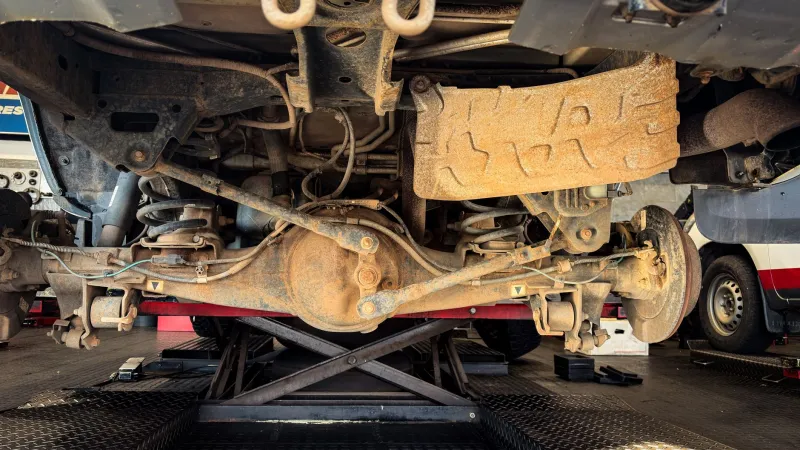
Potholes and broken edges can affect several things at once. A hard hit can knock the wheel alignment out, particularly the front toe settings. It can bend a track rod or a suspension component. It can pinch a tyre sidewall, chip an alloy, or damage a wheel bearing. Older bushes that were already tired may finally give up after one more sharp jolt. London adds its own flavour: speed cushions, raised junctions, tight kerbs, and repeated stop-start traffic all work the suspension harder than a steady motorway cruise.
The symptoms that earn a workshop visit
Start with the simple stuff. Check tyre pressures when the tyres are cold, including the spare if you have one. Uneven pressures can cause a pull, and it is an annoying way to pay for a diagnosis you could have done at home. Look at the tread as well. Inner or outer edges wearing faster than the rest is a clue that the wheel is not sitting square.
Book the car in if you notice any of these:
- The steering wheel is off-centre when driving straight ahead.
- The car pulls left or right on a flat, straight road, especially if it did not before.
- The steering feels vague, twitchy, or heavier than usual.
- There is a new vibration through the wheel or floor at speed.
- You hear a clunk over speed bumps or when turning at low speed.
- A tyre has a bulge, a cut, or a visible sidewall mark after a pothole strike.
- The car pulls under braking, or the brake pedal feels different.
A sidewall bulge is not a monitor-at-leisure item. It is a replacement tyre. The same goes for a visible buckle or a wheel that will not hold pressure. Get those looked at before another London commute.
What a garage actually checks on the ramp
A proper alignment check is not just a case of clipping sensors on and turning a spanner. Before the readings mean anything, the garage should check the tyres, pressures, wheel bearings, ball joints, track rod ends, suspension bushes, and for obvious impact damage. If a track rod end is worn or a bush has torn, aligning the car first is a bit like straightening a picture on a wall that is coming loose.
On the ramp, the readings usually cover camber, caster and toe. Camber is the inward or outward lean of the wheel. Caster relates to the steering axis and affects self-centring and stability. Toe is how much the wheels point in or out relative to each other. A small toe error can wear a tyre quickly and make the steering feel odd. A bigger knock can show up as a change in camber or caster, which may point to a bent component rather than a simple adjustment.
The garage should also look at the tyres for irregular wear and check whether the steering wheel is centred after any adjustment. If the car has been lowered, has mismatched tyres, or has a known suspension fault, say so before the ramp. It saves everyone a round of guesswork.
If you hit a pothole: build a paper trail
If you want to claim from a council or your insurer, evidence matters. Stop somewhere safe and take photographs of the pothole with something for scale, such as a shoe or a water bottle. Note the road name, the direction you were travelling, the time and date, and any nearby landmarks. Dashcam footage is useful. So is a photo of the damaged wheel or tyre before it is repaired.
Report the pothole to the relevant highway authority. In London that may be the borough council or Transport for London if it is on a red route. Keep the reference number. If you get the car inspected, keep the garage report, the alignment printout, and the repair invoice. A claim is not a guarantee of payment; councils have inspection and repair schedules, and each case is assessed on its facts. But a clear record of location, damage and cost gives you something to work with.
If you are thinking about an insurance claim, weigh the excess against the repair cost. A small alignment bill may not be worth a claim. A buckled wheel, damaged suspension and a new pair of tyres might be. Ask whether it affects your no-claims discount before you decide.
Repair now, or keep an eye on it?
Use a simple rule: sudden changes get attention, slow wear gets monitored. A new pull, a vibration, a clunk, or a damaged sidewall means book it in. A mild drift with even tyre wear and no noises may be worth watching for a week or two, especially if you have just driven through a known bad stretch. But do not let a small alignment issue turn into a scrubbed tyre.
If the car needs alignment, ask for the before-and-after readings. If it needs new suspension parts, align it afterwards. And if the same wheel keeps losing its setting, ask why. Repeated alignment is a symptom, not a maintenance schedule.
London driving is hard enough without a car that feels like it is steering itself towards the kerb. A quick check after a bad pothole strike is cheaper than a tyre, a wheel and a suspension arm all deciding to fail at once. If you are unsure, pop in and let someone put it on the ramp. Better a ten-minute look now than a mystery bill later.