The London Width Tax: Reading Narrow-Street Damage Before It Gets Expensive
London doesn’t really do wide. Between Victorian terraces, width restrictions, pavement parking and the daily school-run squeeze, most cars pick up a few battle scars before they’re old. A kerbed alloy here, a clipped mirror there, a bit of trim hanging loose after a supermarket car park shuffle. It’s easy to shrug it off. The trick is knowing which knocks are just London’s version of a stone chip — and which ones are quietly telling you something more serious is going on.
First, the honest bit: most kerb kisses are cosmetic
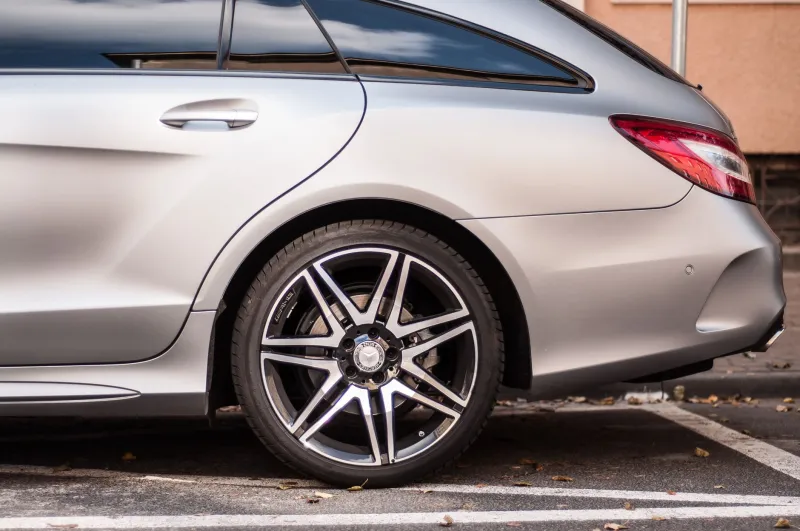
A scuffed alloy wheel is usually exactly what it looks like. You caught the kerb while turning into a tight residential street, or you misjudged the gap between a bin store and a bollard. The wheel still holds air, the tyre looks fine, the steering feels normal. In that case, you’re dealing with cosmetics: grazed lacquer, a bit of road rash on the rim edge, maybe a small chunk out of a mirror cap.
Cosmetic damage can wait. It doesn’t need an emergency garage visit, and it won’t necessarily fail an MOT. But it’s still worth noting. A scuff that exposes bare alloy can start to corrode, especially with the salt and grit that come with a London winter. A cracked mirror cap can let water into the electrics. And a loose bit of trim can turn into a flapping nuisance at 20mph on the A406.
When a kerb kiss is more than a scuff
The important question isn’t “does it look bad?” It’s “did anything behind the wheel take a hit?” A sharp kerb impact can damage more than the rim. Watch for a tyre sidewall bulge, a cut, or a chunk missing from the rubber. That’s not cosmetic. A sidewall bulge means the tyre’s internal structure has been compromised, and it can fail without much warning. If you spot one, don’t wait. Get it looked at properly.
Other red flags include vibration through the steering wheel at speed, a car that pulls to one side, or a new noise over bumps. Those can point to a bent wheel, knocked alignment, or suspension damage. London’s potholes and raised kerbs are not gentle, and a small impact can be the straw that breaks a tired bush or a worn top mount.
Mirrors deserve a mention too. A clipped mirror housing might look like a plastic-only problem, but modern mirrors often contain heated glass, indicator repeaters, power-fold motors, cameras and blind-spot sensors. If the housing is cracked, water can get in and cause electrical gremlins later. If the mirror glass is cracked or loose, you’ve got a visibility issue — and that’s not something to leave until payday.
The two-minute pavement-side check
After a knock, find a safe place to stop — not halfway into a cycle lane. Have a proper look at the wheel and tyre. Run your hand around the tyre sidewall and tread, checking for bulges, cuts or embedded objects. Look at the alloy face and inner barrel if you can see it. Check the mirror housing for cracks and make sure the glass is secure. Give any loose trim a gentle wiggle; if it’s hanging by a clip, it needs attention before it flies off.
Then drive normally and pay attention. Any new vibration, pulling, or clunking is your cue to book a garage inspection. A photo of the damage on your phone is genuinely useful — it helps you describe what happened and gives the garage a starting point.
Alloys: refurbishment versus replacement
Alloy refurbishment is a sensible option for cosmetic scuffs, and plenty of London drivers use it to keep a car looking smart before selling or returning a lease. A decent refurb can restore the finish, but it shouldn’t be used to disguise a structural problem. If a wheel is cracked, badly bent or losing air, a cosmetic refurb is not the fix. Ask the garage to check the wheel for runout and cracks, especially if you’ve had a hard kerb strike.
Diamond-cut wheels can be more expensive to refurbish, and some finishes are harder to match than others. That’s worth knowing before you get a quote. A cheap refurb that starts corroding again in six months isn’t a bargain.
Mirrors and trim: the small parts that add up
A mirror cap is usually cheaper than a full mirror assembly, but only if the internal parts are sound. If the power-fold has stopped working, the indicator is full of condensation, or the camera has gone fuzzy, you’re into a bigger repair. Trim clips are often inexpensive, but the labour to refit a bumper insert or a door strip can add up. Get a clear quote that separates parts from labour, and ask whether a used or pattern part is an option.
Protecting your car on the school run and supermarket squeeze
There’s no magic fix for narrow streets, but a few habits help. Fold the mirrors when you’re parked on a tight residential road, and use them when you’re squeezing past a delivery van. Don’t rely solely on parking sensors and cameras — they’re aids, not force fields. If you have to mount a kerb, do it slowly and at as shallow an angle as you can. Keep tyre pressures correct; a soft tyre is more vulnerable to sidewall damage. And if you’re choosing a parking bay, the end space with a bit of extra room is often worth the short walk.
When to book it in
Book a check if you’ve got vibration, pulling, a tyre bulge, a cracked mirror glass, a loose trim panel, or any warning light that appears after a knock. If the damage is purely cosmetic, you can plan it around your budget. If it affects the tyre, steering or visibility, treat it as a safety matter. And if your MOT is coming up, mention the damage when you book — a damaged tyre sidewall or a sharp, protruding piece of trim can affect the test, and it’s better to know before the tester does.
The neighbourly bottom line: London will keep charging its width tax. Most of the time, a scuffed alloy is just a scuffed alloy. But a quick look now can stop a small kerb kiss from turning into a tyre, suspension or electrical bill later.