Frost, Fog and a Running Engine: Rethinking the London Cold-Start Ritual
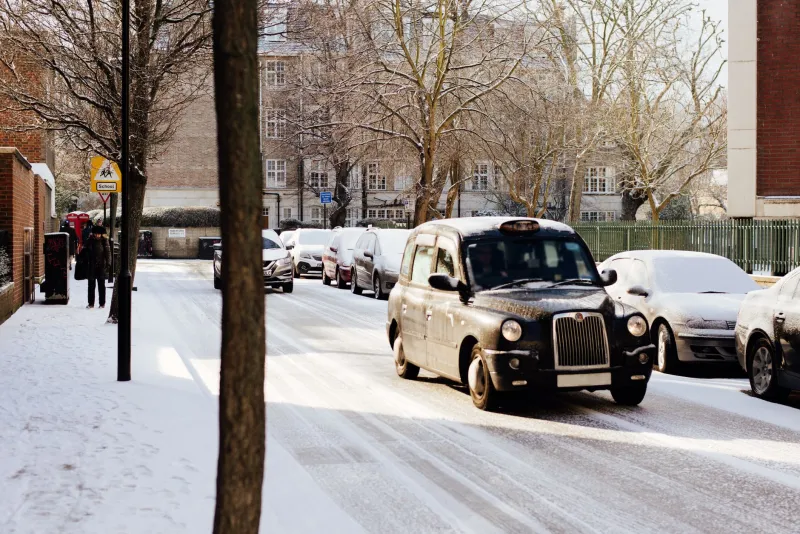
There's a sound that drifts down residential streets in November and December, somewhere between six and eight in the morning: a car sitting at the kerb, nobody in it, engine ticking over while the owner chips frost off the windscreen with a debit card. It's a small, sensible-sounding thing to do. Give the old girl a few minutes to wake up. Get the heaters going. Be comfortable.
Except the engine isn't really waking up. It's just sitting there, cold, burning fuel and doing a fair impersonation of a very expensive fan heater. If you've done this for years — and plenty of us have — it's worth twenty minutes of your time to hear the other side of it.
What a cold engine actually thinks of idling
When you start from cold, the oil is thick and slow to reach the top of the engine. Idling doesn't fix that. It's the lightest possible load, so the engine produces very little heat and warms up at a crawl — far slower than it would if you simply drove gently for the first mile or two.
While it sits there cold, a few things happen quietly in the background. Combustion runs richer, so unburnt fuel can wash past the piston rings and dilute the oil. Moisture from combustion condenses in the crankcase and the exhaust instead of being burned off, because the exhaust isn't hot enough yet. That's the white steam you see on a frosty morning — mostly harmless water vapour, but a sign that everything is still below working temperature.
The catalytic converter is in the same boat. It only starts doing its job properly once it's hot, and idling gets it there at a snail's pace. So the ten minutes you spend idling are, in emissions terms, some of the dirtiest minutes your car will produce all week.
None of this destroys an engine overnight. Do it every weekday from November to February for eight years, though, and the wear adds up in a way that a gentle drive never would.
The fuel maths nobody enjoys
A typical petrol engine idling burns somewhere around half a litre to a litre an hour, depending on size, plus a bit more in the first minute from cold when everything is rich. Ten minutes is a small number in isolation — the price of a decent coffee. Multiply it by five mornings a week, across a London winter, across every car on your street, and the number stops feeling small.
There's also the old myth that restarting the engine costs more fuel than leaving it running. That was closer to true with carburettors and dodgy starters forty years ago. Modern fuel injection and stop-start systems exist precisely because restarting is cheap and idling isn't. If your car turns itself off at the lights, it's already telling you what the manufacturer thinks of unnecessary idling.
Why your windows fog up more, not less
Here's the counter-intuitive bit. Idling often makes the glass worse, not better. A cold engine blows cold air, and the heater matrix can't do much until the coolant is warm. Meanwhile, you climb in with damp coat, damp shoes and breath, and if the air is set to recirculate, all that moisture has nowhere to go except onto the glass.
The faster route to clear windows is the air conditioning. It dehumidifies as well as cools, and it works from the moment you switch it on — cold engine or not. Combine that with a decent scraper, some de-icer and the rear screen button, and you'll be on your way in the time it takes to clear the side windows.
One thing to avoid: pouring hot water on the glass. It's a fine way to crack a windscreen, and a cracked windscreen is an MOT failure and a very irritating Monday.
The legal picture on your street
The Highway Code is fairly clear that you must not leave a vehicle engine running unnecessarily while it's stationary on a public road. In London, most boroughs have powers to issue a fixed penalty for idling — commonly around £20, though it can escalate if it goes unpaid — and enforcement tends to concentrate where complaints come from. School gates, taxi ranks, outside stations, the bit of road where the nursery run queues up.
In practice, you're unlikely to be fined for ninety seconds while you scrape the windscreen. But leaving the car running for fifteen minutes with nobody in it, or sitting outside a primary school with the engine on, is exactly the behaviour these rules were written for. It's also the sort of thing that turns into a note under the wiper from a neighbour.
The school-gate problem
Air quality around school entrances is one of the few places where individual habits genuinely move the needle. Nitrogen dioxide and particulates concentrate in the still, cold air right where small people are standing at pushchair height. A row of idling engines at 8:45am is a measurable, local, avoidable source of the stuff.
If you're early for pick-up, switch off. If it's cold, that's what coats and blankets are for. A surprising number of London schools now run 'engine off' campaigns, and some boroughs have designated clean-air streets at drop-off times.
A cold-morning routine that actually works
- Clear the glass first, engine off. Scraper and de-icer, all round, including mirrors and lights. It's a legal requirement to have a clear view, and an unclear windscreen is an MOT-adjacent conversation you don't want.
- Start the car, let it settle for 20–30 seconds. That's enough for oil pressure to build. No revving, no waiting for the temperature gauge to move.
- Drive gently for the first couple of miles. Light throttle, keep the revs modest, avoid hard acceleration. Load warms the engine far faster and more evenly than idling ever will.
- Use the air conditioning and demist settings from the off. Clear glass in under a minute, even on a frosty morning.
- Skip the drive-through queue when it's stationary for long. If you're going to sit for five minutes, switch off.
If you run an electric or plug-in hybrid car, you already have the better answer: preconditioning while plugged in, heated seats and a heated screen. Warmth without a cold engine sitting at the kerb.
One small habit change
Nobody is suggesting you shiver your way to work. The point is simpler than that: idling doesn't do what people think it does. It doesn't protect the engine, it doesn't clear the windows faster, and it doesn't really save you time.
Clear the glass, start up, drive gently, and let the car warm itself the way it was designed to. Your engine, your fuel bill and the air at the school gate will all quietly thank you.